Defensive Driving: What to Do If You Get a Flat Tire While Driving

Driving home last Thursday night in Ottawa, I saw two cars on the side of the road with flat tires. Ugh!

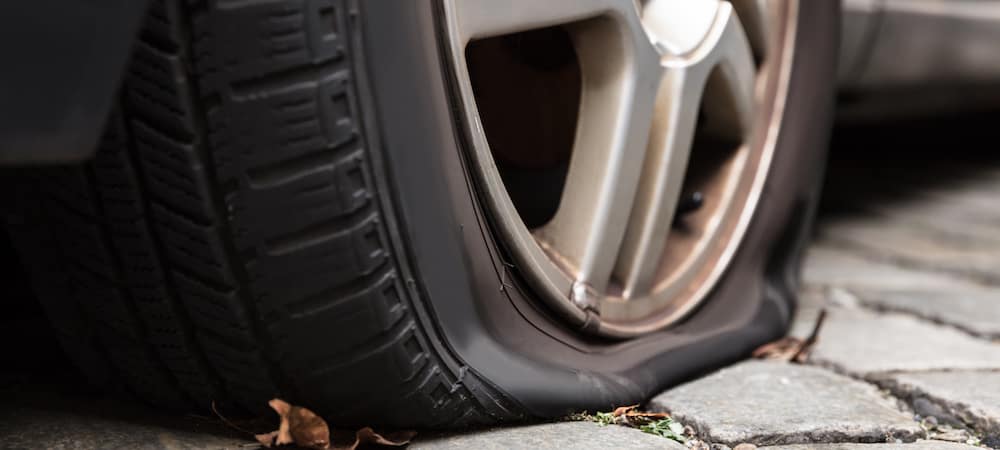
Most of us have heard the ominous “thump thump thump” while driving that means our vehicle is now operating one wheel short of the full set. Getting a flat tire is never much fun, but a blowout while driving at high speed, such as on a highway can be extremely dangerous. The safety of you, your passengers and those travelling in vehicles around you depends on your ability to keep calm, think quickly, and carry-out the steps below.

  1. Slow down – emphasis on the slow. Do not slam on the brakes, as three tires instead of four means reduced traction with the road, and you don’t want to make a bad situation worse by causing the car to spin or slide into traffic. Instead, take your foot off the accelerator and gently apply the brake.
  2. As you decelerate, steer the car into a safe zone like an adjacent parking lot (if you’re on city streets) or the side of the road (if you’re on the highway).
  3. Know the safety zones. Always pull your car off to the RIGHT side of the road, unless crossing multiple lanes of traffic is impossible or unsafe. Once off the road, stop your car as far away from the roadway as possible.
  4.  Turn on your flasher lights – especially if you’re unable to get far away from the flow of traffic. This is an immediate alert to other drivers that you are in distress and could mean the difference between getting rear-ended while stopped and avoiding a devastating collision. Popping your hood sends a similar message.
  5. If you’re able to change the flat tire yourself, do so only if you can work safely. Otherwise, call roadside assistance or the non-emergency police number for assistance.
  6. Be safe. If you’re waiting for help, stand back from the road. If you’re in a dangerous neighborhood, you may be safer in your car with the doors locked until aid arrives.

It’s impossible to completely eliminate the possibility of a flat tire, but adding a few items to your car’s inventory while you’re doing routine maintenance can make dealing with one a little easier. Always carry a spare tire and equipment to help install it, like a jack and lug wrench. Foam sealants are a cheap quick fix for a flat, but should only be used in emergencies as some tire shops will refuse to repair a tire because sticky residue the sealant leaves behind. Still, in an emergency when you need to get back on the road in a hurry, having foam sealant handy can be a temporary fix.

If you’ve been in an Ontario car accident and need the advice of an accident lawyer, reach out to the experienced Ottawa personal injury lawyers at Auger Hollingsworth.  We will provide you with the information you need to make the right decisions about compensation in your case.  Call our law firm today 613 233-4529.

Ottawa Lawyer Brenda Hollingsworth Featured in Distinctive Women Magazine

Auger Hollingsworth’s founding lawyer Brenda Hollingsworth was honoured in May to be featured in Distinctive Women Magazine .  Brenda was interviewed for the article earlier this year and was photographed by the very talented Michelle Valberg.

There are many fantastic Ottawa women featured in the magazine.  If you are interested in receiving a copy, please email Brenda directly at brenda@ottawalawfirm.ca.

Brenda’s favorite line from the article is this one: “Personal injury victims often feel powerless. We can change that.” 

Brenda Hollingsworth, Lawyer

Photo Credit: Michelle Valberg


Why do I need an Ottawa personal injury lawyer?

At our law firm we are regularly reminded why it is vitally important to get legal help early after an Ottawa motor vehicle accident.  When you don’t, valuable evidence can be lost or forgotten.

Recently we were preparing our client for examination for discovery.  That is the step in the lawsuit when the other side’s lawyer gets to ask you questions about your accident and injuries.  Our client was intelligent and sophisticated.  However, he had been through so much in the aftermath of the accident, that the precise details of the accident itself had started to slip his mind.

Fortunately, we had interviewed him shortly after the accident and had taken extensive notes about:

  • the route he took before the accident;
  • how he approached the intersection;
  • how long he waited for the light to turn green;
  • what position he was facing as he advanced;
  • whether or not he was drinking coffee at the time of the accident;
  • how long it was between the time he saw the vehicle that struck him and the impact itself;
  • what happened to his body inside the car on impact;
  • where his vehicle stopped;
  • what he did after the accident;
  • who was present at the scene and what they said; and
  • what pain or discomfort he felt at the scene.

These are small details that can make a difference both to liability (ie who was responsible for the crash) and damages (ie the extent of your injuries).  Having a personal injury lawyer record your earliest recollections for you can save a lot of heart ache as time passes and life fills your head with details other than these.

Do yourself a favour.  After a serious accident, have a legal consultation to determine what your options are.  For more info or to contact a personal injury lawyer, call 613 233-4529.


What if I am in an Ottawa Accident and Not Wearing My Seat Belt?

It is widely accepted that seat belts can help prevent or reduce injury in the event of a car accident. Further, wearing a seat belt while driving or riding in a vehicle is mandatory across Canada, and failing to do so is considered a punishable offence. Consequently, there are some important facts to be aware of if you are ever involved a car accident and you are not wearing your seat belt.


What is Contributory Negligence?


“Contributory negligence” is a term that is often associated with personal injury claims. Essentially, it means that the injured party is in some way responsible for their own injuries due to negligence.


For example, a pedestrian who is struck by a car while crossing the street may be found to be partially at fault for his own injuries if he did not check the traffic before attempting to cross the road.


In many personal injury cases, a court may decide that the person making the claim has in some way contributed to their own injuries, and adjust the amount of the claim accordingly. For example, if someone is making a claim worth $100 000, but it is determined that contributory negligence is 25%, the claimant would only be entitled to receive $75 000 instead of the full amount.


Determining Liability


It is fair to assume that when someone is in a car accident and not wearing their seat belt, contributory negligence may come into play. That is, the court may determine that if the injured party had been wearing a seat belt, their injuries likely would have been lessened or prevented.


The question then becomes: to what degree is the injured party responsible for their own injuries due to negligence?


The Ontario Court of Appeal has provided some standard guidelines that can help answer this question. They have determined that the range for contributory negligence in these cases should be from 0 to 25 per cent.


Therefore, depending on the extent to which a jury believes a claimant’s injuries could have been prevented by wearing a seat belt, they can determine the contributory negligence to be as high as 25 per cent. The claimant’s overall damages could then be reduced by as much as 25 per cent.  The 25 per cent is not mandatory.  It could be a lesser percentage.


If you or someone you know has been in an Ottawa accident where you were not wearing a seat belt, you should consult a personal injury lawyer, who can further help you understand the legal implications of your accident.

To speak with an Ottawa personal injury lawyer at Auger Hollingsworth, please call us at 613-860-4529, email us at info@personalinjuryottawa.ca, or use our contact form.

Things To Consider After a Motorcycle Accident

                Riding a motorcycle in Ottawa carries with it a higher burden of responsibility than for most drivers on the roads.  You are not encased in a steel frame and you do not have the added protection of seatbelts and airbags.  Riders must exercise extra caution as they are more vulnerable to more serious and different types of personal injuries.  For this reason it is also important to know what to do after you have been in an accident.  If you have been in a motorcycle accident in Ottawa, you should seek medical attention and consult an Ottawa Personal Injury Lawyer to ensure you are taken care of in any pending settlements.

                Motorcycle injuries can often be very serious.  Some injuries, while still serious, may not be as easy to spot as fractured bones or severe cuts or lacerations.  Muscle, tendon and nerve injuries can often take days or even weeks to present any symptoms.  Concussions are also known to not show symptoms in the early stages after a motorcycle accident.  Nevertheless, all these injuries can have tragic effects on your ability to work and live for many years down the road.  Seek medical help and have a thorough post- accident examination immediately.  The sooner injuries are discovered and treated, the sooner you are can be on the road to recovery.

                As soon as possible after your motorcycle accident, contact an Ottawa Personal Injury Lawyer.  With their professional experience, help and guidance, they can help you ask the right questions and get the right answers.  From doctors to questions regarding insurance claims and benefits, they will ensure that your health and best interests are represented and you get the treatment, defence and settlements that you deserve.

                If you have been involved in an Ottawa motorcycle accident contact, or have suffered a motorcycle injury, contact the personal injury lawyers at Auger Hollingsworth for a free no charge consultation.  Call us at 613 233-4529.

Questions at Examination for Discovery in Ontario

Are you going to be examined for discovery in a car accident case in Ontario?  Here are some topics you will likely be asked about by the lawyer for the at fault driver’s insurance company:

Your Background:

  • Your name
  • Address
  • Education
  • Marital / Family Status

Your Home:

  • The layout of your home
  • Number of bedrooms
  • Number of bathrooms
  • Size of your lot
  • Number of stairs
  • Location of the laundry
  • Number and size of gardens
  • Who cleaned the house before the accident
  • Who cleans the house after the accident
  • Details about any limitations in housekeeping and home maintenance

Your Injuries

  • Head to toe, identify all the body parts that were hurt in the accident
  • Details about the prognosis of each injury
  • Details about how each injury has improved or not since the accident
  • Details about what medical professionals have said about the injuries
  • Any planned surgeries
  • Details of any psychological / emotional injuries
  • Steps you have taken to get better
  • All therapies under taken
  • Medications since the accident
  • Specialists seen since the accident and what they have said
  • Description of the pain experienced since the accident

 The Accident

  • Details about the vehicle you were in / bike you were on
  • Where were you going?
  • What route did you take?
  • Were you familiar with the route?
  • Were you distracted in the vehicle?
  • Were you wearing your seatbelt?
  • When did you first see the other vehicle?
  • What did you see?
  • What did you do?
  • What part of your body made contact with the inside of the car, if any?
  • Did you hit your head?
  • How far did your car move at impact?
  • Speed at impact?
  • Details about lighting, weather, visibility, road condition
  • Damage to the vehicles
  • Statements given to police
  • On site first aid received

Loss of Income / Loss of Competitive Advantage

  • Details about your employment history over past 10 years
  • Job at the time of the accident, including duties, physical requirements, salary, benefits, performance review, raise history
  • Time lost from work after the accident
  • Details of return to work
  • Description of any current limitations at work

While this is not a comprehensive list, being able to answer these questions confidently and accurately will take you a long way in your discovery preparation.

For more information about the steps in a personal injury law suit, contact a personal injury lawyer at Auger Hollingsworth at 613 233-4529.

Ottawa Injury Lawyer: Preventing Traumatic Brain Injury

Traumatic brain injury (TBI) is a serious injury, typically caused by a severe blow to the head. TBI has many different symptoms and can cause a wide variety of problems and disabilities for those affected.

While TBI cannot always be completely cured, and while the recovery process can be long and challenging, there are some important prevention methods that everyone should be aware of.


TBI: Common Causes

Traumatic brain injury can be caused by a wide variety of incidents. Some of the most common causes include the following:


-   Car accidents

-   Other transportation accidents, including bicycles and motorcycles

-   Slips and falls, including falling down stairs, falling out of bed, or slipping in the bath

-   Sports-related injuries, particularly involving high-impact sports like football, boxing, or skateboarding

-   Work-related injuries, often caused by working with unsafe equipment or on unsafe surfaces


Preventing TBI

While some incidents of TBI are nearly impossible to prepare for or avoid, there are some basic methods of prevention that can help individuals avoid serious injury.


Here are some simple things everyone can do to help prevent TBI:

-   Always wear a seatbelt when riding in a car or other vehicle

-   Never drive while under the influence of alcohol or drugs

-   Follow speed limits and take proper precautions while driving

-   Make sure that children are properly restrained in a car seat or booster seat while riding in a vehicle

-   Always wear a helmet when riding a bicycle or motorcycle

-   Always wear a helmet and proper protective equipment when participating in any kind of contact or extreme sports (including activities like skiing or skateboarding)

-   Hold onto railings when walking up or down stairways

-   Ensure there is adequate lighting when walking up or down stairways

-   Do not stand or sit on unsafe or unbalanced surfaces

-   Always be aware of your surroundings, and always use common sense


Unfortunately, even if you do everything right, accidents do happen and injuries like TBI cannot always be prevented. If you or someone you know has been affected by a traumatic brain injury as a result of an accident, be sure to contact an injury lawyer, who can help you navigate any complicated legal implications of your situation. A good injury lawyer will help ease some of the stress associated with a complex injury like TBI.


To speak with an Ottawa personal injury lawyer at Auger Hollingsworth, please call us at 613-860-4529, email us at info@personalinjuryottawa.ca, or use our contact form.

Ottawa Injury Lawyer: What is Traumatic Brain Injury?

Traumatic brain injury (TBI) is a serious injury caused by an external force severely damaging the brain. It can often lead to serious disabilities or even death. Because TBI affects the brain, it is completely different than injuring another organ or limb. Our brains are connected to all aspects of our being, including cognitive functions and our personalities. Thus, TBI is not just a matter of physical injury, but can also have severe mental implications, making the recovery process much more complicated and uncertain.


Causes

TBI is typically caused by a severe blow to the head. Common causes of TBI include:

-   Car accidents and other transportation accidents, including bicycles and motorcycles

-   Sports and recreation-related accidents

-   Slips and falls, particularly among children

-   Work-related accidents


Signs & Symptoms

Because TBI is such a complicated injury, its symptoms can be varied and widespread. However, some of the most common symptoms of TBI include:

-   unconsciousness

-   convulsions

-   headache

-   vomiting or nausea

-   dizziness or lightheadedness

-   lack of balance or coordination

-   blurred vision

-   fatigue or lethargy

-   slurred speech or difficulty speaking

-   weak or numb limbs


There are also non-physical symptoms that may occur, including:

-   changes in mood or behaviour

-   confusion

-   trouble concentrating or remembering

-   difficulty focusing, paying attention, or thinking


Diagnosis

TBI is typically diagnosed by a doctor through a physical or neurological examination of the patient, often including verbal or cognitive tests to determine the mental implications of the injury. Doctors may also order an MRI or a CT scan to determine the extent of the injury.


The Glasgow Coma Scale is a system that evaluates a person’s conscious state and level of consciousness following a head injury. It can help determine the severity of a brain injury and help doctors prescribe the proper course of treatment. The Glasgow Coma Scale evaluates a patient’s visual, verbal, and motor response to different stimuli and assigns a score based on each response. This score helps doctors identify the severity of the patient’s brain injury and make an accurate prognosis.


Treatment & Recovery

Recovering from TBI can be a long and difficult process. It is crucial to begin treatment as soon as possible in order to minimize the damage to the brain. Treatment itself depends on the severity of the injury and the state of the patient.


Treatment options may include:

-   Antibiotics to prevent infection

-   Surgery to reduce swelling of the brain or remove broken skull fragments

-   Rehabilitation to help patients regain brain function, including speech and mobility


If you or someone you know has suffered from TBI as a result of an accident, it is important to consult a good personal injury lawyer. To speak with an Ottawa personal injury lawyer at Auger Hollingsworth, please call us at 613-860-4529, email us at info@personalinjuryottawa.ca, or use our contact form.

Best Ottawa Personal Injury Lawyer Tips for 2012

Looking for the best tips from a personal injury lawyer in Ottawa?  Based on our tremendous success in 2011, we are looking to share our best success strategies for injured people looking for fair compensation.

  1. Give the best statement that you can to the police.  Most personal injury cases in Ottawa do not involve elaborate accident reconstruction reports.  In the vast majority of cases, liability (who is responsible for the accident) will be determined by what the witnesses to the accident say to the police and what the drivers involved in the accident say to the police.  Make sure your version of events is accurately recorded by the police so that your story becomes part of the police report.
  2. Get the best evaluation of the damage to your vehicle.  Make sure that all of the damage to your car is recorded in writing by the garage, even if everyone knows the car is a write off.  If the underside of the vehicle is bent or damaged in a manner that does not show up in photos, get the mechanic to reduce that to writing before the car is sent to the scrap yard.
  3. Get the best medical treatment possible.  Go to the hospital on the date of the accident and tell the doctors about ALL of your symptoms, not just the most severe.  Follow up with your family doctor immediately (within days).  At  each visit, mention all your areas of pain and limitations.  Request referals to specialists and for diagnostic tests like an MRI.  Don’t wait for the doctor to suggest it.
  4. Get the best rehab possible.  Don’t just assume that the physio or occupational therapist referred by the insurance company is the best or only choice.  Shop around for patient-centred rehab providers (not insurance centred providers).
  5. Hire the best personal injury lawyer for your case.  Take advantage of the free consultations offered by most personal injury lawyers to find the best fit for your case.

Looking for more information?  Call our office to book a free consultation at 613 233-4529.  We would be happy to help you.

Ottawa Facing Longer Medical Wait Times

OTTAWA INJURY LAWYER - Worrisome news for Ottawans… The head of the provincial wait time committee says Ottawa is lagging behind in the improvement of wait times for medical services. Significantly, the areas’ medical facilities did not meet their wait time targets for certain services like MRIs and knee replacements.

In another article earlier in the week, the Ottawa Hospital was proposing to free up beds by having elderly patients transfered to home care. Sounds like squeezing the balloon to us. There may be a few more hospital beds if they elderly are kept home but the publicly-funded home care capacity of the Community Care Access Centres is also strapped, chronically underfunded and struggling to meet demand.

If you have been injured in Ottawa or Eastern Ontario, you should speak with a lawyer after you have received the immediate medical attention you require. For more information, contact the personal injury lawyers at Auger Hollingsworth by email info@ottawalawfirm.ca or by phone at (613) 233-4529.

Next Page »
  • Auger Hollingsworth Personal Injury Lawyers representing injured people in Ottawa, Smiths Falls, Perth, Cornwall, Kingston, Renfrew, Lanark, Pembroke, Petawawa and Hawksbury, Toronto, Peterboroght, L'Orignal. Note: This Website Provides Information but not legal advice. Contact a lawyer for legal advice about your case. Every case is different.
  • 1443 Woodroffe Avenue, Ottawa, Ontario Canada K2G 1W1 - Copyright © 2010-2013 Auger Hollingsworth, Ottawa Injury Lawyers - Beers Design