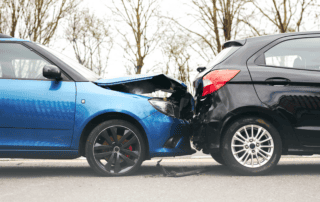
Defensive Driving: What to Do If You Get a Flat Tire While Driving

Driving home last Thursday night in Ottawa, I saw two cars on the side of the road with flat tires. Ugh!

Most of us have heard the ominous “thump thump thump” while driving that means our vehicle is now operating one wheel short of the full set. Getting a flat tire is never much fun, but a blowout while driving at high speed, such as on a highway can be extremely dangerous. The safety of you, your passengers and those travelling in vehicles around you depends on your ability to keep calm, think quickly, and carry-out the steps below.

  1. Slow down – emphasis on the slow. Do not slam on the brakes, as three tires instead of four means reduced traction with the road, and you don’t want to make a bad situation worse by causing the car to spin or slide into traffic. Instead, take your foot off the accelerator and gently apply the brake.
  2. As you decelerate, steer the car into a safe zone like an adjacent parking lot (if you’re on city streets) or the side of the road (if you’re on the highway).
  3. Know the safety zones. Always pull your car off to the RIGHT side of the road, unless crossing multiple lanes of traffic is impossible or unsafe. Once off the road, stop your car as far away from the roadway as possible.
  4.  Turn on your flasher lights – especially if you’re unable to get far away from the flow of traffic. This is an immediate alert to other drivers that you are in distress and could mean the difference between getting rear-ended while stopped and avoiding a devastating collision. Popping your hood sends a similar message.
  5. If you’re able to change the flat tire yourself, do so only if you can work safely. Otherwise, call roadside assistance or the non-emergency police number for assistance.
  6. Be safe. If you’re waiting for help, stand back from the road. If you’re in a dangerous neighborhood, you may be safer in your car with the doors locked until aid arrives.

It’s impossible to completely eliminate the possibility of a flat tire, but adding a few items to your car’s inventory while you’re doing routine maintenance can make dealing with one a little easier. Always carry a spare tire and equipment to help install it, like a jack and lug wrench. Foam sealants are a cheap quick fix for a flat, but should only be used in emergencies as some tire shops will refuse to repair a tire because sticky residue the sealant leaves behind. Still, in an emergency when you need to get back on the road in a hurry, having foam sealant handy can be a temporary fix.

If you’ve been in an Ontario car accident and need the advice of an accident lawyer, reach out to the experienced Ottawa personal injury lawyers at Auger Hollingsworth.  We will provide you with the information you need to make the right decisions about compensation in your case.  Call our law firm today 613 233-4529.

Ottawa Lawyer Brenda Hollingsworth Featured in Distinctive Women Magazine

Auger Hollingsworth’s founding lawyer Brenda Hollingsworth was honoured in May to be featured in Distinctive Women Magazine .  Brenda was interviewed for the article earlier this year and was photographed by the very talented Michelle Valberg.

There are many fantastic Ottawa women featured in the magazine.  If you are interested in receiving a copy, please email Brenda directly at brenda@ottawalawfirm.ca.

Brenda’s favorite line from the article is this one: “Personal injury victims often feel powerless. We can change that.” 

Brenda Hollingsworth, Lawyer

Photo Credit: Michelle Valberg


Why do I need an Ottawa personal injury lawyer?

At our law firm we are regularly reminded why it is vitally important to get legal help early after an Ottawa motor vehicle accident.  When you don’t, valuable evidence can be lost or forgotten.

Recently we were preparing our client for examination for discovery.  That is the step in the lawsuit when the other side’s lawyer gets to ask you questions about your accident and injuries.  Our client was intelligent and sophisticated.  However, he had been through so much in the aftermath of the accident, that the precise details of the accident itself had started to slip his mind.

Fortunately, we had interviewed him shortly after the accident and had taken extensive notes about:

  • the route he took before the accident;
  • how he approached the intersection;
  • how long he waited for the light to turn green;
  • what position he was facing as he advanced;
  • whether or not he was drinking coffee at the time of the accident;
  • how long it was between the time he saw the vehicle that struck him and the impact itself;
  • what happened to his body inside the car on impact;
  • where his vehicle stopped;
  • what he did after the accident;
  • who was present at the scene and what they said; and
  • what pain or discomfort he felt at the scene.

These are small details that can make a difference both to liability (ie who was responsible for the crash) and damages (ie the extent of your injuries).  Having a personal injury lawyer record your earliest recollections for you can save a lot of heart ache as time passes and life fills your head with details other than these.

Do yourself a favour.  After a serious accident, have a legal consultation to determine what your options are.  For more info or to contact a personal injury lawyer, call 613 233-4529.


Ottawa Injury Lawyer: What is Traumatic Brain Injury?

Traumatic brain injury (TBI) is a serious injury caused by an external force severely damaging the brain. It can often lead to serious disabilities or even death. Because TBI affects the brain, it is completely different than injuring another organ or limb. Our brains are connected to all aspects of our being, including cognitive functions and our personalities. Thus, TBI is not just a matter of physical injury, but can also have severe mental implications, making the recovery process much more complicated and uncertain.


Causes

TBI is typically caused by a severe blow to the head. Common causes of TBI include:

-   Car accidents and other transportation accidents, including bicycles and motorcycles

-   Sports and recreation-related accidents

-   Slips and falls, particularly among children

-   Work-related accidents


Signs & Symptoms

Because TBI is such a complicated injury, its symptoms can be varied and widespread. However, some of the most common symptoms of TBI include:

-   unconsciousness

-   convulsions

-   headache

-   vomiting or nausea

-   dizziness or lightheadedness

-   lack of balance or coordination

-   blurred vision

-   fatigue or lethargy

-   slurred speech or difficulty speaking

-   weak or numb limbs


There are also non-physical symptoms that may occur, including:

-   changes in mood or behaviour

-   confusion

-   trouble concentrating or remembering

-   difficulty focusing, paying attention, or thinking


Diagnosis

TBI is typically diagnosed by a doctor through a physical or neurological examination of the patient, often including verbal or cognitive tests to determine the mental implications of the injury. Doctors may also order an MRI or a CT scan to determine the extent of the injury.


The Glasgow Coma Scale is a system that evaluates a person’s conscious state and level of consciousness following a head injury. It can help determine the severity of a brain injury and help doctors prescribe the proper course of treatment. The Glasgow Coma Scale evaluates a patient’s visual, verbal, and motor response to different stimuli and assigns a score based on each response. This score helps doctors identify the severity of the patient’s brain injury and make an accurate prognosis.


Treatment & Recovery

Recovering from TBI can be a long and difficult process. It is crucial to begin treatment as soon as possible in order to minimize the damage to the brain. Treatment itself depends on the severity of the injury and the state of the patient.


Treatment options may include:

-   Antibiotics to prevent infection

-   Surgery to reduce swelling of the brain or remove broken skull fragments

-   Rehabilitation to help patients regain brain function, including speech and mobility


If you or someone you know has suffered from TBI as a result of an accident, it is important to consult a good personal injury lawyer. To speak with an Ottawa personal injury lawyer at Auger Hollingsworth, please call us at 613-860-4529, email us at info@personalinjuryottawa.ca, or use our contact form.

How can I get my car insurance company to pay my expenses? | Ontario accident

If you have been injured in an Ontario car accident, you may be wondering who will pay for the expenses you incur during your recovery.  In many cases, your car insurance company will be able to cover your expenses, but there is a specific process you have to follow in order for this to happen.

The first thing you need to do is to fill out an Expenses Claim Form (OCF 6).  You can find this form on the following website: http://www.fsco.gov.on.ca/en/auto/forms/Pages/ocf_forms.aspx.

This form should be used to claim expenses that have not already been claimed through your health care provider.  You can claim a number of different expenses on this form, depending on what benefits you are eligible for,  such as rehabilitation treatment, transportation services, cost of hiring a caregiver, etc.  All of the expenses that you claim on this form must have been incurred as a result of your accident and must be covered by your auto insurance policy.  It is important to complete this form thoroughly and completely so that you don’t encounter any unnecessary problems with your claim.


You need to submit the Expenses Claim Form within thirty days of incurring the expense so make sure to keep track and to stay within that specified time-frame.  You also need to include any receipt you have of your expenses so it is best to develop a system of organizing your receipts so that you can easily find them and include them with your form.  Be sure to address your expense form to the appropriate adjuster from your car insurance company so that your claim gets to the right person.  Also, keep a copy of your completed form for your files.  Again, all of this may seem tedious but it is important to follow all of the details so that you can receive your claim.


If you do not receive any payment within thirty-five days of submitting your claim, follow up with the insurance adjuster.  There could be a number of reasons why you haven’t received your payment so be sure to speak with the right adjuster to see what the delay or problem is.  Remember to record all follow up in writing so either print e-mails or keep a copy of letters you send to the adjuster.  This way you have something to refer back to if something goes wrong.


While no one really enjoys filling out forms and organizing receipts, it is worth it in this case in order to receive compensation for your accident-related expenses.  It would be a shame to miss out on some financial reimbursement, so be sure to fill out the appropriate forms and follow all of the necessary steps.

Ottawa Car Accident Lawyer | Complex Regional Pain Syndrome

Ottawa Car Accident Lawyer | Complex Regional Pain Syndrome

Many Ontario accident victims learn they have developed Complex Regional Pain Syndrome or Reflex Sympathetic Dystrophy.  This condition is a chronic neurological syndrome that frequently results in debilitating pain.   Our clients have developed this condition following crush injuries, motor vehicle accident injuries and cycling accidents.

Complex regional pain syndrome may lead to intense burning or aching pain. Suffererd may also experience swelling, skin discoloration, altered temperature, abnormal sweating and hypersensitivity in the injured area.

Treatment for complex regional pain syndrome is most effective when started early.

In our office, we understand the added challenges encountered when you have contracted CRPS/ RDS.  We will assist you to maximize your recovery by sending you to appropriate experts who can competently describe the impact this condition has on your life.   If you would like to speak to an experienced CRPS / RDS lawyer, email us: info@ottawalawfirm.ca.

Albert Street Accident Kills Man and Woman, Ottawa

Albert Street Accident Kills Man and Woman, Ottawa

OTTAWA ACCIDENT LAWYER – A 35-year-old Ottawa woman has died in hospital, succumbing to injuries obtained when she and her husband were struck by a car at an Ottawa bus stop Thursday evening.

The couple was waiting for a bus on Albert Street just west of Bank Street, when at 10:34 PM on September 16, 2010 a black Nissan sports car came around the corner and drove up onto the curb, hitting both the woman and her 36-year old husband.  The accident happened a block and a half from Auger Hollingsworth’s office in an area with constant construction.

The male victim was pulled from underneath the vehicle and pronounced dead on site, while the woman was transported to The Ottawa Hospital with head injuries.

Following the death of both victims, a 20-year-old male faces heightened charges including criminal negligence, stunt racing, and dangerous operation of a motor vehicle.

The woman’s death marks the Ottawa area’s 25th vehicle collision fatality this year. 2008 and 2009 saw similar fatality numbers, but with three months left before the end of the year, 2010 is likely to yield the most accident fatalities of any year on recent record.

If you have lost a loved one in a vehicle accident, you may be entitled to accident benefits as well as a claim for damages from the insurance company of the driver who caused the accident.  Get more information about your rights after an accident with a no-obligation free consultation. Contact the Ottawa personal injury and accident lawyers at Auger Hollingsworth by phone (613) 233-4529 or by email info@ottawalawfirm.ca.

  • Auger Hollingsworth Personal Injury Lawyers representing injured people in Ottawa, Smiths Falls, Perth, Cornwall, Kingston, Renfrew, Lanark, Pembroke, Petawawa and Hawksbury, Toronto, Peterboroght, L'Orignal. Note: This Website Provides Information but not legal advice. Contact a lawyer for legal advice about your case. Every case is different.
  • 1443 Woodroffe Avenue, Ottawa, Ontario Canada K2G 1W1 - Copyright © 2010-2013 Auger Hollingsworth, Ottawa Injury Lawyers - Beers Design