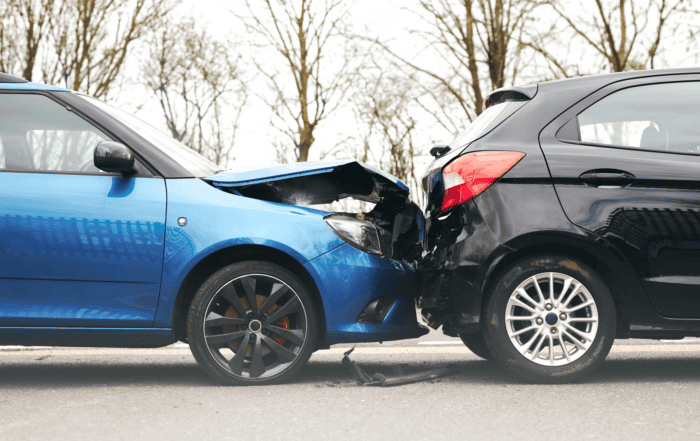
In an Ottawa Accident Without Insurance?

I was injured in an Ottawa accident where I was driving without proper insurance on my car.  Can I sue?

Even if you did not cause the Ottawa car accident, you cannot usually advance a claim or sue the at-fault party if you were knowingly driving without insurance.   Whether or not you were “knowingly” without insurance is something you should discuss with a personal injury lawyer if you have suffered serious injuries.

However, you may still be entitled to accident benefits, medical, rehabilitation and attendant care benefits.

If you suffered serious injuries and had no insurance, request a personal injury consultation by calling 613 233-4529.

I was in a serious car accident in Ottawa, what do I do?

In an Ottawa accident? Here are some basic steps to take right away to protect yourself.

Get the other driver’s information, including:

    • Name
    • Address, Telephone
    • Vehicle licence plate,  make and model
    • Driver’s licence  number
    • Other driver’s  insurance company and policy number

If the other driver tries to deny you any of this information, call the police.

Never admit you were at fault or agree to pay for any damage.

Take photos of the accident scene, your car and your injuries.

Make sure you get the name and phone number of any witnesses.

Go to a doctor if you have been injured.  It is much harder to make a claim later on if you have not seen a doctor within the first week of your accident.

Call the police.  We generally do not accept cases where the police were not called to the scene.

Report the accident to your insurance company.

Get free legal advice from a personal injury lawyer to see if you have a viable claim.

What Should I Wear to Examination for Discovery in an Accident Case?

If you are ever in an Ottawa accident, you may have to take part in an examination for discovery as part of your legal proceedings. Understanding what this process entails and knowing how to present yourself can help you achieve success in your lawsuit.


What is an Examination for Discovery?

Examination for discovery is an important component of most civil lawsuits. Essentially, it is a process where both parties involved in the lawsuit are questioned about the issues surrounding the lawsuit. While each party is questioned by the other party’s lawyer, and the answers are given under oath, examination for discovery is not in itself a trial.


What is the Purpose of Examination for Discovery?

The basic purpose of an examination for discovery is to allow each party and their lawyers to learn about and understand the other side’s case.


Throughout their questioning, the lawyers for each party will typically be trying to accomplish a few basic things, including the following:

-   Understand the other party’s point of view, and more fully define and narrow the issues involved in the lawsuit.

-   Discover if there are any areas where both parties are in agreement, possibly allowing a pre-trial settlement to be reached.

-   Obtain an admission from the other party that later can be used in their client’s favour while at trial.


What Should You Wear to an Examination for Discovery?

Many clients wonder what they should wear to attend this part of their legal process. Though it is not an official trial, it is still very important to make sure that you are appropriately dressed. A good rule of thumb is to make sure you look well-groomed and presentable. Essentially, you want to wear neat, clean, conservative clothes. You do not necessarily have to wear a suit, but you should look as neat as possible, and avoid any offensive slogans on your clothing. This is a very important part of your legal process, and it is crucial that you are as prepared and presentable as possible.


If you or someone you know has been in an Ottawa accident, a good injury lawyer can help you to better understand your legal options, and help you navigate all aspects of the legal process, including the examination for discovery.


To speak with an Ottawa personal injury lawyer at Auger Hollingsworth, please call us at 613-860-4529, email us at info@personalinjuryottawa.ca, or use our contact form.

Ottawa Physiatrists- Who are Ottawa’s Physiatrists

If you have been injured in an accident, your family physician may recommend that you see a physiatrist for a diagnosis and rehab plan for your injuries.  If you live in Ottawa, the College of Physicians and Surgeons identifies the available physiatrists as follows:


Acharya,   Meenaxi Surendra Elisabeth   Bruyere Hospital
43 Bruyere Street
Ottawa ON K1N 5C8
Phone: (613) 562-0050
Fax: (613) 562-6312


Besemann,   Markus Heinrich Canadian Forces Health Services HQ
1745 Alta Vista Drive
Ottawa ON K1A 0K6
Phone: (613) 945-6600 Ext. 6515
Fax: (613) 998-3924


Blackmer,   Jeffrey Edwin The Rehabilitation Centre
505 Smyth Road
Ottawa ON K1H 8M2
Phone: (613) 737-7350
Fax: (613) 737-9638


Buenger,   Usha Rita The Rehabilitation Centre
505 Smyth Road
Ottawa ON K1H 8M5
Phone: (613) 737-7350 Ext. 75627


Dabee,   Vassant Children’s Hospital   of
Eastern Ontario
401 Smyth Road
Ottawa ON K1H 8L1
Phone: (613) 737-7600 Ext. 2832
Fax: (613) 738-4878


Dojeiji,   Suzan Samantha The Rehabilitation Centre
505 Smyth Road
Room 1104
Ottawa ON    K1H 8M2
Phone: (613) 737-7350 Ext. 75306
Fax: (613) 737-6877


Dudek,   Nancy Lorraine 505 Smyth     Road
Ottawa ON K1H 8M2
Phone: (613) 737-7350


El-Sawy,   Reda Mohamed 381 Kent     Street
Suite 505
Ottawa ON K2P 2A8
Phone: (613) 234-7780
Fax: (613) 234-6636


Finestone,   Hillel Moses c/o Elisabeth Bruyere Hospital
Department of Physical Medicine
And Rehabilitation
75 Bruyere Street
Ottawa ON K1N 5C8
Phone: (613) 562-6094
Fax: (613) 562-6312


Khan,   Anjum Sarah Elisabeth   Bruyere Hospital
Dept of Phys Med and Rehabilitation
43 Bruyere Street
Ottawa ON K1N 5C8
Phone: (613) 562-6262


Lentini,   Anthony Campallegio Suite   218
223 Colonnade Road South
Ottawa ON K2E 7K3
Phone: (613) 792-1525
Fax: (613) 792-3648


MacGregor,   Susan Lynne The Rehabilitation   Center
505 Smyth Road
Ottawa ON K1H 8M2
Phone: (613) 737-7350 Ext. 75596
Fax: (613) 737-9638


Marks,   Meridith Belle The Rehabilitation Centre
505 Smyth Road
Ottawa ON K1H 8M2


Marshall,   Shawn Calder The Ottawa   Hospital
Rehabilitation Centre
505 Smyth Road
Ottawa ON K1H 8M2
Phone: (613) 737-8899 Ext. 75590
Fax: (613) 737-9638


McCormick,   Anna Marie The Children’s Hospital
of Eastern Ontario
Rehab PSU
401 Smyth Road
Ottawa ON K1H 8L1
Phone: (613) 737-7600 Ext. 2831
Fax: (613) 738-4893


McKee,   Alexander Carman Suite   2
3635 Rivergate Way
Ottawa ON K1V 2A4
Phone: (613) 739-3459
Fax: (613) 739-1471


Quon,   Deanna Lee The Ottawa   Hospital
Rehabilitation Centre
505 Smyth Road
Ottawa ON K1H 8M2
Phone: (613) 737-7350 Ext. 75595


Racine,   Francois 595 Chemin Montreal
Suite 404A
Ottawa ON    K1K 4L2
Phone: (613) 745-7399
Fax: (613) 745-9875


Sreenivasan,   Vidya Anandhi The Rehabilitation Centre
Room 1200
505 Smyth Road
Ottawa ON K1H 8M2
Phone: (613) 737-7350 Ext. 75595
Fax: (613) 737-9638


Trudel,   Guy The Rehabilitation Centre
505 Smyth Road
Ottawa ON K1H 8M2
Phone: (613) 737-8899 Ext. 75591
Fax: (613) 739-6864


Wiebe,   Scott Christopher The Ottawa   Hospital
Dept of Physical Medicine & Rehab
Room 1105C
505 Smyth Road
Ottawa ON K1H 8M2
Phone: (613) 737-7350 Ext. 75596
Fax: (613) 737-9638


Wolff,   Gerald Keith The Rehabilitation Centre Ottawa
Dept of Physical Medicine & Rehab
Room 1105
505 Smyth Road
Ottawa ON K1H 8M2
Phone: (613) 737-8899 Ext. 75598
Fax: (613) 737-9638


Yang,   Christine Ping Bruyere Continuing Care
Physical Medicine & Rehab Service
43 Bruyere Street
Ottawa ON K1N 5C8
Phone: (613) 562-6094
Fax: (603) 562-6312

GCS of 9 or Below as a Basis for Catastrophic Injury After an Ontario Accident

The Ottawa personal injury team at Auger Hollingsworth was recently successful at having our client identified as having suffered a catastrophic injury on the eve of a FSCO arbitration.  The insurer had denied that our client was catastrophically injured, despite the fact that she was noted to have suffered a GCS of 9 and below in the initial period after the accident.  The following is an excerpt from the legal argument we filed at FSCO.

 ISSUES ON THE ARBITRATION

The primary issue in this arbitration is whether Client  has suffered a catastrophic impairment under the Statutory Accident Benefits Schedule – Accidents on or after November 1, 1996, (“SABS”). Subsection 2(1.1)(e) of the SABS sets out the definition for catastrophic impairment as follows:

(1.1)  For the purposes of this Regulation, a catastrophic impairment caused by an accident that occurs before October 1, 2003 is, …

e.       brain impairment that, in respect of an accident, results in,

                                i.      a score of 9 or less on the Glasgow Coma Scale, as published in Jennett, B. and Teasdale, G., Management of Head Injuries, Contemporary Neurology Series, Volume 20, F.A. Davis Company, Philadelphia, 1981, according to a test administered within a reasonable period of time after the accident by a person trained for that purpose, or [emphasis added]

ii.      a score of 2 (vegetative) or 3 (severe disability) on the Glasgow Outcome Scale, as published in Jennett, B. and Bond, M., Assessment of Outcome After Severe Brain Damage, Lancet i:480, 1975, according to a test administered more than six months after the accident by a person trained for that purpose;

Source:            Statutory Accident Benefits Schedule – Accidents on or after November 1, 1996, O.Reg. 403/96, s. 2(1.1) (e) [Book of Authorities at Tab 1].

ANALYSIS

Issue 1: Catastrophic Impairment

 The opinion of the Riverfront assessors and the insurer in this arbitration is incorrect both in medicine (as set out by Dr. Marshall) and in law, as described herein.


  1. A.    The test for catastrophic impairment is a legal test, not a medical test.

The case law is clear that the test to be applied to identify catastrophic impairment is a legal test, not a medical one. The leading case on this issue is the decision of the Court of Appeal for OntarioLiu v.1226071 Ontario Inc. It is clear from this decision that the interpretation of the relevant subsection of the SABS requires the application of a legal definition, not a medical test.


Source:            Liu v.1226071 Ontario Inc, 2009 ONCA 571 at para. 27 [Book of Authorities at Tab 2].


In Liu, the Court of Appeal rejected the insurer’s argument that the fact that the claimant’s GCS rose from 3 to 12 within 33 minutes somehow took the claimant out of the section.  The Court stated:

[27]         In my view the answer to the respondents’ objection is the plain language of the legislation.  Provided there is a brain impairment, all that is required is one GCS score of 9 or less within a reasonable time following the accident.  It is a legal definition to be met by a claimant and not a medical test.


[28]         I agree with the appellant’s submission that the fact that there may have been other higher scores also within a reasonable time after the accident is irrelevant.


[29]         In my view the trial judge fell into error in equating the statutory test to a medical one.  It is not.


[30]         Any notion of catastrophic injury, other than the specific meaning ascribed to that term by the legislation must be discarded when considering whether a claimant meets the statutory test.   The statutory scheme creates a bright line rule which is relatively easy to apply. This enhances the ability of those looking to the definition to know what injuries will and will not be considered catastrophic. Having the same definition for both no fault and third party liability claims avoids inconsistency. The ease with which the rule can be applied adds an element of predictability which will facilitate the settlement of claims.


[31]         It matters not that there is some evidence – albeit disputed evidence – that the appellant is capable of managing his property, clothing, hygiene, shelter, safety and taking two trips toChina. Nor does it matter that his head injury was described as “moderate to severe” or “moderately severe”.


[32]         All that is required is a brain impairment and a GCS reading of 9 or below within a reasonable period of time after the accident. The appellant met both criteria on the trial judge’s findings and is entitled to recover damages for health care costs in accordance with the verdict of the jury [emphasis added].


Source:            Liu v.1226071 Ontario Inc, 2009 ONCA 571 at paras. 27-32 [Book of Authorities at Tab 2].


B.     The presence of hypotension does not invalidate the GCS reading


In Young v. Liberty Mutual, Arbitrator Allen rejected the notion that GCS readings obtained in the presence of confounding factors such as intubation, sedation and post-accident seizures were invalid.  The Arbitrator held that the legislature was presumed to understand that GCS readings would be influenced by post-trauma complications and yet chose not to create exclusions for these situations. As she held:

I find one must be able to assume the legislature was aware of these features of the GCS score when it chose it as a means to assess catastrophic brain impairment. Surely the legislature would not have intended to provide the GCS score as a measure of catastrophic impairment under circumstances where the very characteristics of this tool would rule it out as an appropriate measure. It cannot be intended by the legislature that the most seriously injured might not have the enhanced benefits available to them soon after the accident because their GCS scores were confounded by the severity of their injury. In the end, however, the GCS score is a tool medical assessors and adjudicators must work with in assessing catastrophic brain impairment.

I accept the Applicant’s view that a GCS score is not intended to project into the future the medical status of an applicant, but is rather a tool employed among medical practitioners to communicate the level of consciousness of a person who has sustained head trauma. It is employed under the Schedule as a measure of an injured person’s states of consciousness for a reasonable time after the accident in order to assess the level of brain impairment [emphasis added].


Source:            Young v. Liberty Mutual, 2003 FSCO A02-000695, at pp. 25 and 28 [Book of Authorities at Tab 4] aff’d 2005 FSCO Appeal Order P03-00043 [Book of Authorities at Tab 5] and 2006 CanLII 7286 (ON SCDC) [Book of Authorities at Tab 6].


Accordingly, in this case, the Riverfront assessors’ opinion that Client ’s significant hypotension would somehow invalidate her GCS reading is incorrect in law.


C.    The prognostic value of the GCS reading is not relevant


On appeal, the Director’s Delegate in Young v. Liberty Mutual, rejected the notion that a GCS reading would only be the basis for a finding of catastrophic impairment where the GCS reading was predictive of outcome. In that decision, it was held:

I agree with the arbitrator. Again, to return to the definition, “catastrophic impairment” means brain impairment that, in respect of an accident, results in a score of 9 or less on the Glasgow Coma Scale. None of the other provisions of the definition require a forecast of the insured’s future condition, so it is unclear why a forecast should be part of the GCS test. The definition on its face requires that the low scores result from a brain impairment, and accordingly the “reasonable period of time” requirement focuses on that point and not on a forecast. The matter would be different if, for instance, catastrophic brain impairment meant brain impairment resulting from GCS scores of 9 or less taken after a reasonable period of time. However, that would then start to resemble the GOS [subclause e(ii)] test, which does indeed look at the outcome of the insured after six months.

Source:            Young v. Liberty Mutual, 2005 FSCO Appeal Order P03-00043 at 25, 26 [Book of Authorities at Tab 5].

In Tournay v. Dominion of Canada General Insurance Company, it was held:

[The GCS] is not intended to be administered in the manner of an insurer’s examination by someone retained to give the insurance company an independent opinion on neurological function.  The GCS is a clinical test, pure and simple.  Thus, if a medically appropriate GCS test registers a score of “9 or less” within a reasonable time after the accident, where the brain impairment as a result of the accident is not contested, then, in my view, that must be taken as satisfying Section 2(1.1)(e)(i) of the schedule.

Source:            Tournay v. Dominion of Canada General Insurance Company, 2006 FSCO A05-000507 at 16 [Book of Authorities at Tab 8].


D.    A broad reading is to be given to the section


A broad and inclusive interpretation of this subsection of the SABS is appropriate.  The Honourable Mr. Justice Keenen in Holland v. Pilot Insurance Company states “This type of regulation is adopted by the legislature after extensive consultation with interested parties, including insurers.  If restricted meaning is to be assigned to the regulation, it should clearly be recited in the regulation itself.”

Source:            Holland v. Pilot Insurance Company, 2004 CanLII 13787 (ON SC) at para 24 [Book of Authorities at Tab 6].


It is respectfully submitted that Client  meets the test for catastrophic impairment. She sustained a brain impairment, which continues to impair her. She had a GCS reading of 9 or less in respect of an accident. The GCS reading was administered within a reasonable time after the accident. The readings were taken by persons trained for that person. Accordingly, all of the statutory pre-requisites are met.

Questions at Examination for Discovery in Ontario

Are you going to be examined for discovery in a car accident case in Ontario?  Here are some topics you will likely be asked about by the lawyer for the at fault driver’s insurance company:

Your Background:

  • Your name
  • Address
  • Education
  • Marital / Family Status

Your Home:

  • The layout of your home
  • Number of bedrooms
  • Number of bathrooms
  • Size of your lot
  • Number of stairs
  • Location of the laundry
  • Number and size of gardens
  • Who cleaned the house before the accident
  • Who cleans the house after the accident
  • Details about any limitations in housekeeping and home maintenance

Your Injuries

  • Head to toe, identify all the body parts that were hurt in the accident
  • Details about the prognosis of each injury
  • Details about how each injury has improved or not since the accident
  • Details about what medical professionals have said about the injuries
  • Any planned surgeries
  • Details of any psychological / emotional injuries
  • Steps you have taken to get better
  • All therapies under taken
  • Medications since the accident
  • Specialists seen since the accident and what they have said
  • Description of the pain experienced since the accident

 The Accident

  • Details about the vehicle you were in / bike you were on
  • Where were you going?
  • What route did you take?
  • Were you familiar with the route?
  • Were you distracted in the vehicle?
  • Were you wearing your seatbelt?
  • When did you first see the other vehicle?
  • What did you see?
  • What did you do?
  • What part of your body made contact with the inside of the car, if any?
  • Did you hit your head?
  • How far did your car move at impact?
  • Speed at impact?
  • Details about lighting, weather, visibility, road condition
  • Damage to the vehicles
  • Statements given to police
  • On site first aid received

Loss of Income / Loss of Competitive Advantage

  • Details about your employment history over past 10 years
  • Job at the time of the accident, including duties, physical requirements, salary, benefits, performance review, raise history
  • Time lost from work after the accident
  • Details of return to work
  • Description of any current limitations at work

While this is not a comprehensive list, being able to answer these questions confidently and accurately will take you a long way in your discovery preparation.

For more information about the steps in a personal injury law suit, contact a personal injury lawyer at Auger Hollingsworth at 613 233-4529.

Ottawa Injury Lawyer: Understanding the Glasgow Coma Scale

Ottawa Injury Lawyer: Understanding the Glasgow Coma Scale

If you or someone you know has been diagnosed with Traumatic Brain Injury (TBI) in Ottawa, you may have heard of the Glasgow Coma Scale (GCS), which is a system used by doctors to evaluate and diagnose the symptoms associated with TBI.


GCS: An Overview

GCS is a 15-point scale that helps doctors determine the severity of a patient’s brain injury.


Patients are evaluated in the following categories:


  1. Motor Response: Scores range from 1 (no motor response) to 6 (obeys commands fully)
  2. Verbal Response: Scores range from 1 (no verbal response) to 5 (alert, coherent, and oriented)
  3. Eye Opening Response: Scores range from 1 (no eye opening) to 4 (eyes opening spontaneously)


Interpreting GCS Results

The patient’s three scores are added up, and the final score helps to diagnose the injury.


Generally, the scores can be classified as follows:

13 to 15: Mild brain injury

9 to 12: Moderate brain injury

3 to 8: Severe brain injury


Many medical practitioners consider 8 to be the critical score, meaning that patients with a score less than or equal to 8 are often in a coma.


TBI Symptoms: Mild vs. Severe

A patient who receives a GCS score of 13 to 15 is typically diagnosed with a mild brain injury. Their symptoms, however, can still last one year or more and have a serious impact.


Common symptoms of mild TBI include:

-   Fatigue

-   Headaches

-   Memory loss

-   Dizziness or lack of balance

-   Inability to concentrate or pay attention

-   Seizures

-   Mood changes, including irritability or feelings of depression


Patients who score less than 13 on the Glasgow Coma Scale are typically diagnosed with a moderate to severe brain injury. The symptoms of moderate or severe TBI are wide-ranging and can affect all areas of a patient’s life.


These symptoms may include:

-   Difficulties speaking, concentrating, or remembering

-   Loss of vision or blurred vision

-   Loss of hearing or ringing in the ears

-   Seizures

-   Paralysis

-   Chronic pain

-   Sleep disorders

-   Changes in appetite

-   Emotional difficulties, including irritability, depression, aggression, or lack of awareness


Treatment and Recovery

GCS is an important tool in accurately diagnosing traumatic brain injury. Once the patient’s injury has been classified as mild, moderate, or severe, a proper course of treatment can prescribed. If you or someone you know has suffered from TBI as a result of an accident, be sure to consult an injury lawyer as part of your recovery process. A good injury lawyer can help you understand and settle the legal aspects of your injury.


To speak with an Ottawa personal injury lawyer at Auger Hollingsworth, please call us at 613-860-4529, email us at info@personalinjuryottawa.ca, or use our contact form.

Do I have a Claim after Ottawa OC Transpo Bus Crash?

Ottawa, Wednesday, February 8th.  Rush hour traffic was sent into gridlock when two OC Transpo buses collided on the transit way near Tunney’s Pasture and Holland Avenue.  Bus route # 61 and bus route   # 98 crashed, forcing police and OC Transpo officials to shut down the busy Ottawa bus route until 7pm last night.  Paramedics sent 12 people to hospital and treated many others at the scene.

Click here if you are wondering if you have a claim for damages after the OC Transpo bus crash.

The injured passengers were sent to local hospitals mostly complaining of neck pain, and knee and joint pain, according to paramedics on the scene.  None of the injuries were considered serious, although neck related injuries such as whiplash are always treated with caution as underlying issues may be present.  Amongst the injured was one of the bus drivers involved in the accident.

Many local Ottawa commuters were delayed several hours yesterday due to the crash and passengers of both buses were in shock over the incident.  For those injured it may be several days or weeks before the pains of Tuesday’s unfortunate collision subside.  The health and welfare of the passengers and victims is the most important issue in any accident.

For all of us, the OC Transpo accident is a reminder of the importance of public safety, and how vital public transportation is to communities and the city of Ottawa.  Accidents can happen even amongst the most experienced and trained of drivers and public workers.  The hope is that from every incident comes the knowledge to help prevent reoccurrence in the future and to keep improving our public health and safety.

If you or someone you know has been injured in a public transportation accident, or any other form of accident, call us at 613-233-4529.  Know your rights and let the personal injury lawyers of Auger Hollingsworth help.

Ottawa Personal Injury Lawyer’s Secrets to a Successful Discovery

While the legal process can be overwhelming and challenging for someone who has recently suffered a personal injury, it should be comforting to know that there are a few things you can do to make your experience more positive.

No one really wants to face all that pursuing a personal injury claim entails, but having the right Ontario injury lawyer will greatly help you navigate the complicated legal process.  One of the most challenging parts of presenting your case is examination for discovery.  If you have been injured in an accident, you will likely have to be a witness at examination for discovery.  This means that you will have to explain your side of the story, answer the insurance company lawyer’s questions in cross-examination, and confront all of the evidence involved in the case.

The Ontario personal injury lawyers at Auger Hollingsworth are committed to helping their clients and other witnesses, such as family members, get through discovery successfully.  The key to doing this is preparation.  A good injury lawyer should prepare all of their witnesses for what discovery will entail.  For the lawyers at Auger Hollingsworth, this is accomplished through up to three meetings.

 During the first meeting, the injured person or their family member is oriented to the process of discovery.  Your lawyer will explain what discovery means, what will happen and what will be required of you.  The Auger Hollingsworth website is full of useful information to help witnesses prepare for discovery and during this meeting, the witness will take home a package of information to look over.  This first meeting is meant to introduce the witness to the process of discovery and to talk about the case in general terms.

 The second meeting is more detailed and involves a dry-run of what the witness will have to say and the kinds of questions they will have to answer.  Your lawyer will focus on examining you on the more difficult points of the case so that you are better prepared.

 The third and final meeting involves a mock cross examination by another lawyer in the office.  This ensures that you are fully prepared to be cross examined.  If this trial run goes well, you should be well-prepared to face any insurance company’s lawyer.  While this process of preparation may sound intense and tiring, it is worth investing the time to prepare for whatever you may face during discovery.

 If you have further questions about discovery and preparing for your case, contact the Ontario personal injury lawyers at Auger Hollingsworth.  Call us at 613 233-4529.

Will Ottawa Personal Injury Lawyer Brenda Hollingsworth take My Case?

If you have suffered an Ottawa car accident, you may be wondering if Ottawa Lawyer Brenda Hollingsworth will take your personal injury case.  Check out this video, where Brenda answers this important question.

Will Ottawa Lawyer Brenda Hollingsworth Take Your Case?

We would be happy to speak to you.  Just call at 613 233-4529.

Next Page »
  • Auger Hollingsworth Personal Injury Lawyers representing injured people in Ottawa, Smiths Falls, Perth, Cornwall, Kingston, Renfrew, Lanark, Pembroke, Petawawa and Hawksbury, Toronto, Peterboroght, L'Orignal. Note: This Website Provides Information but not legal advice. Contact a lawyer for legal advice about your case. Every case is different.
  • 130 Albert Street, Suite 1005, Ottawa, Ont K1P 5G4 - Copyright © 2010-2012 Auger Hollingsworth, Ottawa Injury Lawyers - Custom Web Design